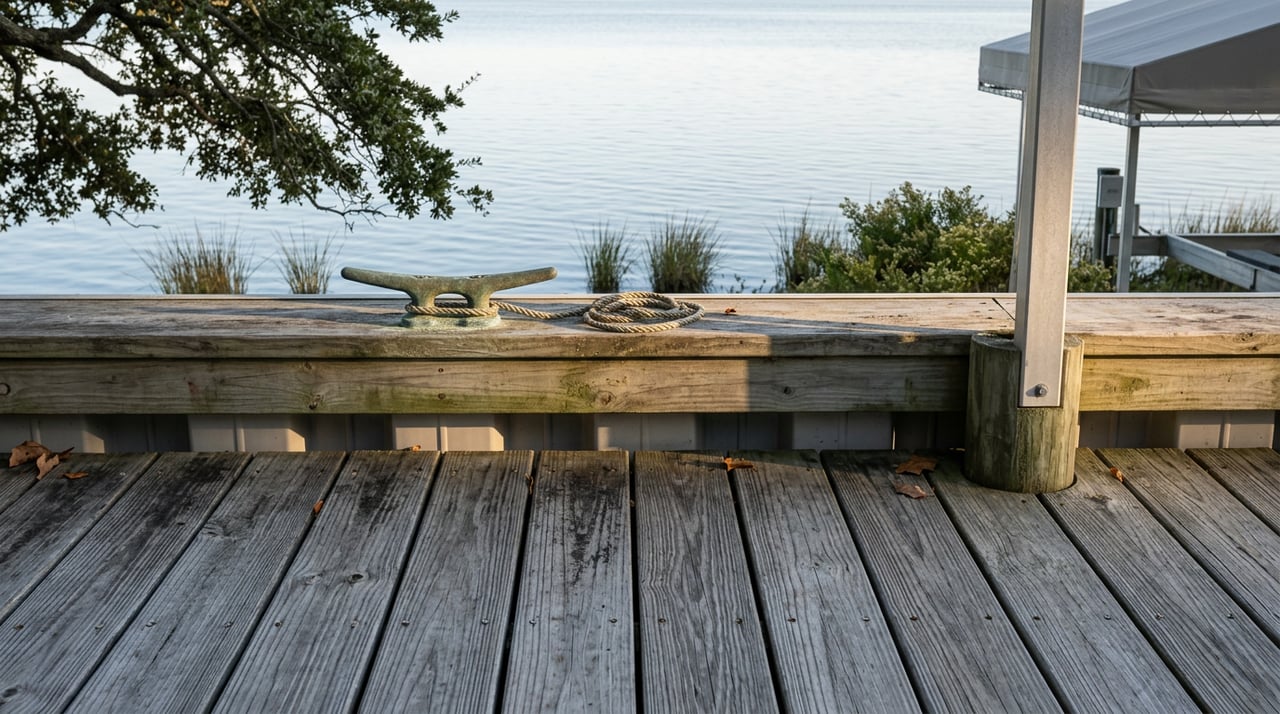
On February 19, 2026, the Virginia Beach Wetlands Board fined a contractor named Chris Sheppard, doing business as Piranha Pier Works, $3,000 for building a bulkhead nobody had approved. The structure went up on Broad Bay at 1704 Stephens Road, inside the tidal wetlands jurisdiction the Board has overseen since the 1970s. The homeowner, Richard Neary III, wasn't the one fined. He was the one left with the paperwork: an after-the-fact permit application that landed on the Board's April 20 agenda, two months later, asking the city to legalize a bulkhead that was already sitting in the water.
That case matters less because it's unusual and more because it isn't. Work through the Wetlands Board's 2026 agendas and you'll find applications touching Linkhorn Bay, the Western and Eastern branches of the Lynnhaven River, Long Creek, and Crystal Lake, the same waters that wrap Great Neck's peninsula. If you own, or are about to buy, waterfront property on this side of Virginia Beach, the paperwork behind your dock is a live variable in your transaction whether anyone has mentioned it yet or not.
A peninsula where almost everyone touches water
Great Neck sits between Broad Bay and the Lynnhaven River, with Linkhorn Bay along its edge, which is exactly why the neighborhood carries such a concentration of private piers, bulkheads, boat ramps, and rip-rap shorelines. Most other Virginia Beach neighborhoods never have to think about any of this. Here, it's part of what buyers are paying for, and it's also why Great Neck generates a disproportionate share of Wetlands Board business compared with inland neighborhoods where a fence permit is about as complicated as things get.
What actually needs sign-off
The city's own description is broader than most sellers expect. Virginia Beach's Wetlands Board page states plainly that an approved joint permit application is required to construct, alter, or repair landings, docks, bulkheads, and similar structures. That covers:
- Bulkheads and rip-rap revetments
- Boat ramps and boathouses
- Piers, including attached features like gazebos
- Dredging within tidal creeks and inlets
- Repairs to structures that already exist, not only new builds
The 2026 agendas show the range in practice: a bulkhead and modified boat ramp on Linkhorn Bay, a rip-rap revetment and return wall on Crystal Lake, a riprap revetment with a boathouse on Linkhorn Bay, a bulkhead and riprap on the Western Branch Lynnhaven River. None of these were unusual requests. They were the normal monthly business of a Board that meets because this stretch of the city is built almost entirely on tidal shoreline.
The intake line moved in 2025
If you haven't dealt with a waterfront permit in a few years, the process itself has changed. Effective September 1, 2025, the U.S. Army Corps of Engineers became the single point of receipt for all joint permit applications in Virginia, a shift from the prior system routed through the Virginia Marine Resources Commission, according to VMRC's own habitat management page. Every application now moves through the Corps' Regulatory Request System before it's distributed to VIMS, the Department of Environmental Quality, and the local Wetlands Board. A seller assuming the process still works the way a neighbor described it five years ago is checking the wrong door.
The fees and the calendar
| Step | Detail |
|---|---|
| Filing deadline | First day of the month, for the following month's hearing |
| Hearing schedule | Third Monday of each month, staff briefing at 9 a.m., public hearing at 10 a.m., Virginia Beach Municipal Center |
| Waterfront construction or dredging fee | $230, nonrefundable |
| Wetlands-impact permit fee | $450 |
| State-mandated timeline | Hearing must occur within 60 days of a complete application |
Source: Virginia Beach Planning Department and Code of Virginia § 28.2-1302.
The fee is rarely the whole cost. According to the Virginia Beach Wetlands Board's February 2026 minutes, several 2026 approvals, including the Jalbert application, the Boeshe Trust application, and the Hajimomenian application, carried a "No Net Loss" condition satisfied by purchasing mitigation credits through the Virginia Stream and Wetland Mitigation Program. That's a dollar figure beyond the $230 or $450 filing fee, and it's set case by case. Robert E. Simon of Waterfront Consulting, Inc. is also listed as agent on multiple Great Neck-area applications from 2026.
Where buyer beware stops protecting the seller
Virginia runs on a caveat emptor system. The standard disclosure form lets sellers select "owner makes no representation" on most items, and Virginia's Residential Property Disclosure Act doesn't require a detailed condition report the way many other states do.
But the exceptions are specific. Sellers must disclose pending building code enforcement actions or zoning ordinance violations, a requirement summarized in DPOR's own disclosure guidance.
What a tight market does to a paperwork problem
Great Neck's peninsula is fully built out, with no large undeveloped lots left to add competing inventory. As of July 2026, the typical sale price across the corridor sat in the $420,000s, with waterfront addresses on Broad Bay and the Lynnhaven River regularly clearing $600,000, and larger estate lots pushing well past $1 million. Homes here have also been moving quickly, with recent months averaging under a month on market.
That combination usually hands sellers the leverage. A permit question surfaced during the buyer's due diligence period, instead of before the listing goes live, hands some of that leverage back. An inspection contingency built around an unresolved Wetlands Board matter can add weeks to a timeline exactly when a seller has the least room to absorb them, and it can knock a motivated buyer's confidence in the deal at the worst possible moment.
A short check before you list
- Ask directly whether any dock, bulkhead, boat ramp, or rip-rap on the property was permitted when it was built, and request the paperwork.
- Call the city's Waterfront staff at 757-385-4621 or email [email protected] to check application history before you list, not after an inspector raises the question.
- If work was done without a permit, start the after-the-fact process early. Filing deadlines fall on the first of the month and hearings happen once monthly, so a late start can add real time to a closing calendar.
Quick answers
Does a repair need the same approval as new construction? Yes. The city's own description covers structures that are altered or repaired, not only new builds.
What if the dock or bulkhead was built before I owned the home? Age alone doesn't resolve the question. The fastest way to find out is to ask the Planning Department's waterfront staff directly rather than assume the prior owner handled it.
Who actually reviews these applications? Beyond the city's Wetlands Board, a joint permit application is distributed to the Army Corps of Engineers, the Virginia Institute of Marine Science, and the Virginia Department of Environmental Quality.
Great Neck's water access is the reason people pay a premium to live there, and it's also the reason a shoreline permit question can surface at the worst possible point in a sale. Knowing the status of a dock or bulkhead before a buyer's inspector finds it is the difference between a smooth closing and a stalled one. If you're weighing a move on Broad Bay, Linkhorn Bay, or anywhere along the Lynnhaven, Robert Ramey can help you sort out what's on file before you list. Request a Free Home Valuation and Local Market Review to start with a clear picture of where your property stands.
This article is general information, not legal, tax or financial advice. Consult a qualified professional about your situation.