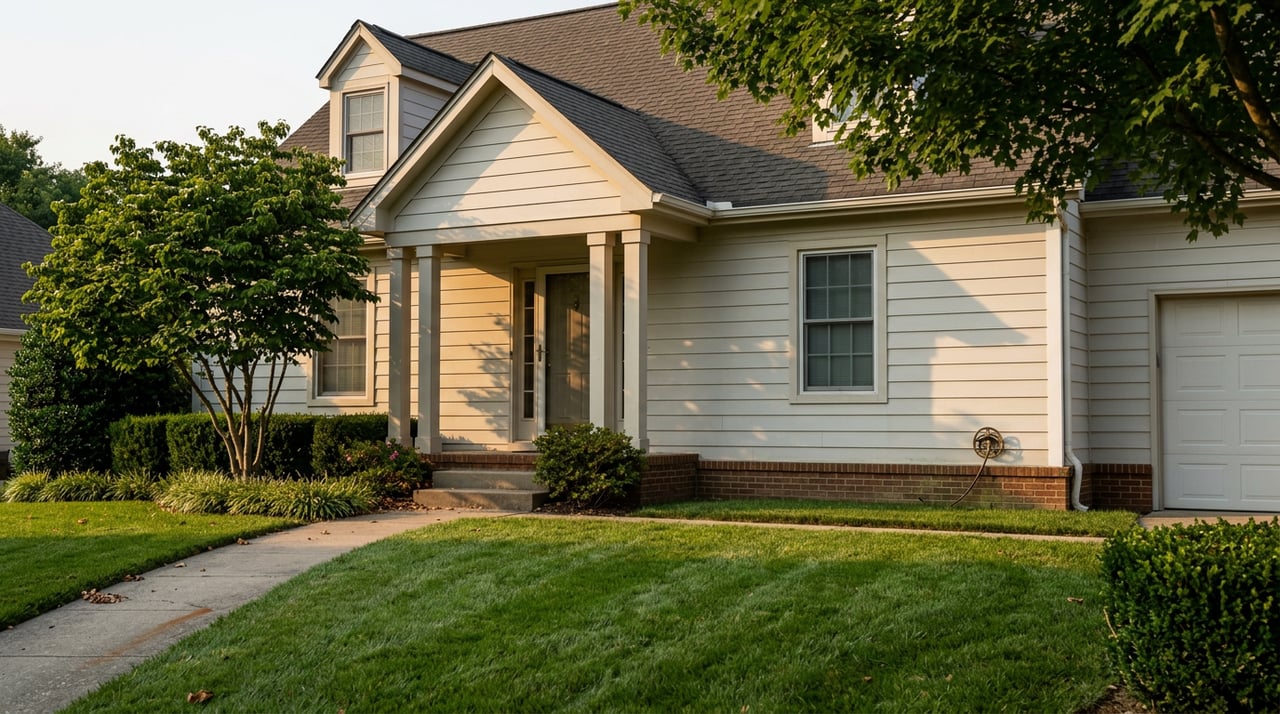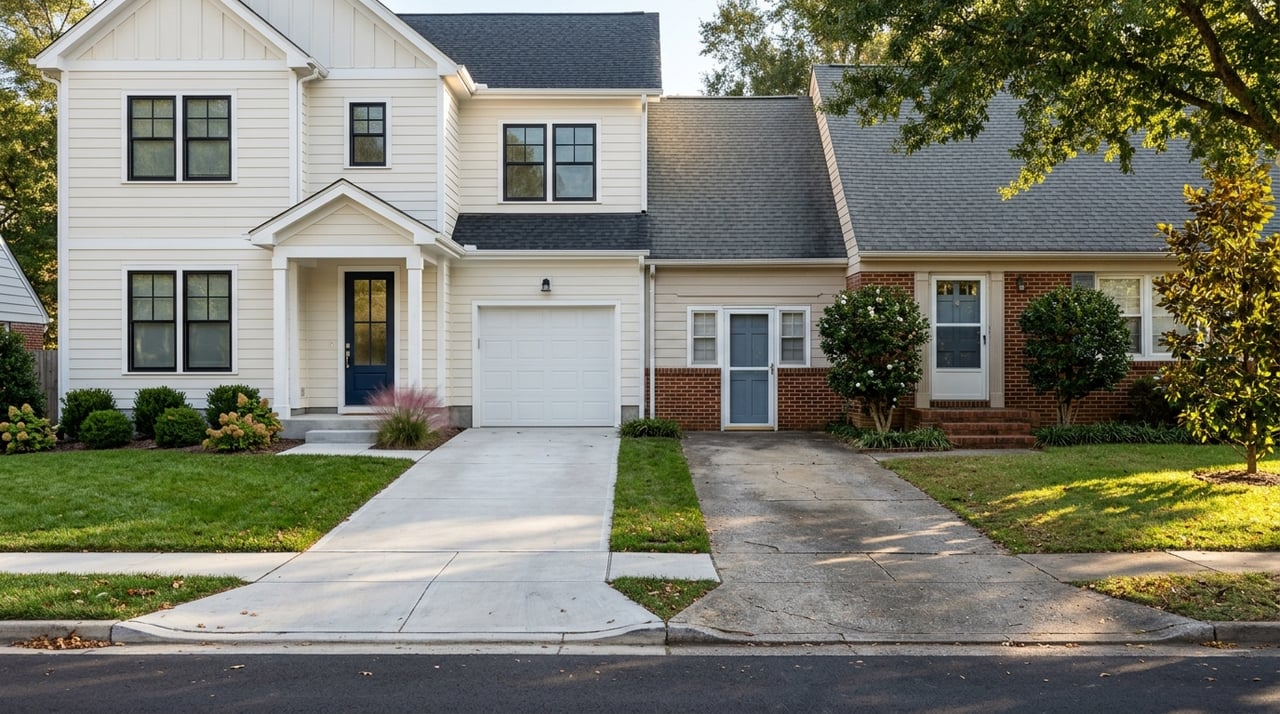
Trying to choose between a brand-new home and an older neighborhood in Chesapeake? You are not alone. Many buyers assume new construction always means higher prices, bigger lots, and more rules, while established neighborhoods mean lower prices and more character. In Chesapeake, the reality is more nuanced. This guide will help you compare price, lot size, HOA costs, and location so you can make a smarter move with confidence. Let’s dive in.
Chesapeake Housing Choices at a Glance
Chesapeake gives you a wide range of housing options, and that is part of what makes the decision interesting. The city’s owner-occupied housing rate was 74.4% in 2020-2024, which shows a market with a strong base of homeowners. The median value of owner-occupied homes was $378,400, and Redfin reported a May 2026 median sale price of $423,629.
Homes also moved at a steady pace, averaging 25 days on market in May 2026. If you are balancing lifestyle, budget, and timing, that market context matters. It means both new construction and established neighborhoods can attract serious interest.
Another factor is how Chesapeake is laid out. The city has ten planning areas, and its long-range framework distinguishes between urban, suburban, and rural patterns. In practical terms, your decision is often not just about home age. It is also about density, lot pattern, and how you want to live day to day.
New Construction in Chesapeake
New construction in Chesapeake is not one single style or price point. Some communities offer attached homes or townhomes with a lower-maintenance setup, while others lean toward larger-lot single-family homes. That makes it important to compare community by community rather than assume all new homes are alike.
The city describes Grassfield as its newest and second-fastest-growing planning area, with newer low-density suburban neighborhoods. Southern Chesapeake remains more rural, though some farmland is being converted into large-tract single-family housing. Greenbrier also includes newer housing options near the city’s major commercial and employment hub.
What New Construction Can Look Like
Current examples show how broad the range can be:
- Crestfield at Centerville lists 10,000-square-foot lots with prices from $658,265 to $813,910 and a $50 monthly HOA.
- Grayson Commons is priced from $439,900 to $479,900 and includes flats and three-story townhomes, with combined monthly fees noted at $175 for condo dues plus $75 for a POA in a current listing example.
- Brabble Shores East in Grassfield includes 12 homesites ranging from a quarter acre to more than an acre, with starting prices from $484,000.
- Woodford Estates offers tree-lined streets and lot sizes from 12,000 to 28,000 square feet.
- A current Haven at Centerville example showed a 2025 build on 0.26 acres with a $155 monthly HOA and an estimated sale price from $715,000 to $866,000.
The takeaway is simple: new construction in Chesapeake spans multiple price tiers and property types. You might find a townhome in the high $400,000s or a larger single-family home well above $700,000.
Established Neighborhoods in Chesapeake
Established neighborhoods also vary more than many buyers expect. Some areas offer smaller lots and older housing stock, while others include larger parcels and no HOA at all. Age alone does not tell the full story.
South Norfolk is described by the city as Chesapeake’s oldest urban area. It has some of the city’s oldest housing stock, smaller homes, and more affordable housing. In the local historic district, visible exterior changes require a Certificate of Appropriateness.
Great Bridge also includes areas with historic protections. The Great Bridge Historic Gateway Overlay District uses character districts and specific development standards to protect the area’s historical significance. If you are considering an established area with historic context, it is worth understanding those requirements before you buy.
What Established Neighborhoods Can Look Like
Recent examples show the variety:
- South Norfolk Historic District had a median sale price of $318,500 over the last three months ending March 2026.
- One South Norfolk home on Seaboard Avenue was built in 1917 on a 2,962-square-foot lot.
- In Great Bridge, the median sale price was $563,000 over the last three months.
- A Great Bridge Boulevard home built in 1955 sat on an 8,973-square-foot lot and sold for $300,000.
- A Deep Creek Boulevard home built in 1954 sat on 0.39 acres and sold for $383,000 with no HOA.
- A Greenbrier Road home built in 1955 sat on 0.75 acres with no HOA and had an asking price of $288,500.
This is why it helps to think in micro-neighborhood terms. An established neighborhood in Chesapeake can mean a small in-town historic lot, or it can mean a much larger parcel with fewer ongoing community fees.
Price: New Does Not Always Mean Higher
One of the biggest myths is that new construction is always more expensive. In Chesapeake, that is not always true. Price depends on location, property type, lot size, and community setup.
The overall median sale price in Chesapeake was $423,629 in May 2026. In the local examples, South Norfolk Historic District sat at about $319,000, while Great Bridge was at $563,000. New-construction examples in this research ranged from roughly $440,000 to more than $800,000.
That means you cannot rely on a simple new-versus-old rule. A new townhome may cost less than an established single-family home in a higher-priced area. At the same time, a new larger-lot home in Grassfield or Centerville may come in far above many older properties.
Lot Size: Focus on Area and Product Type
Lot size is another area where buyers often make assumptions. In Chesapeake, lot size depends more on planning area and product type than on whether a home is newly built.
On the new-construction side, current examples range from 10,000 square feet to more than an acre. On the established-home side, examples range from compact in-town lots under 3,000 square feet to 0.75-acre parcels. That is a wide spread in both categories.
If yard space is high on your list, it helps to narrow your search by planning area and housing type. A historic in-town area may offer a smaller footprint, while parts of Deep Creek, Greenbrier, Grassfield, or Southern Chesapeake may provide more land. The better question is not “new or old?” but “where and what kind of property?”
HOA Costs: Common, but Not Limited to New Homes
HOA costs can shape your monthly budget, so this is one of the most practical comparison points. In the sample of Chesapeake new communities, mandatory dues were common. Monthly costs ranged from $50 in Crestfield to $155 in the Haven at Centerville example, with some attached products carrying higher combined fees.
At the same time, it would be a mistake to assume HOAs only exist in newer communities. Older single-family homes may have no HOA, but established condos and townhomes can still have dues. One 1993 Greenbrier golf-course condo example carried a $300 monthly HOA.
For buyers, this means you should compare the full monthly cost of ownership, not just the sale price. Ask whether the property has an HOA, condo fee, POA, or a combination. Then weigh that against maintenance expectations, lot size, and property style.
Commute and Convenience Depend on Location
A newer home does not automatically mean an easier commute. In Chesapeake, location inside the city matters more than build age. The average commute time was 25.8 minutes in 2024, which gives you a useful citywide baseline.
Some new communities market their access to Chesapeake, Virginia Beach, or major corridors. At the same time, city planning information shows that Western Branch is shaped by interstate and rail corridors, while Southern Chesapeake is more rural and land-constrained. That supports a practical point: commute convenience is about where the home sits, not when it was built.
If you relocate for military or corporate reasons, this is especially important. You may be choosing between a newer home with more distance from your daily routine or an older home in a more central location. A side-by-side map review can often make the answer clearer.
Historic Rules and Neighborhood Character
Established neighborhoods can bring added personality, but they may also come with extra rules. In South Norfolk’s local historic district, visible exterior changes require a Certificate of Appropriateness. In Great Bridge’s Historic Gateway Overlay District, development standards are in place to protect the area’s historic setting.
That does not make these neighborhoods harder to love. It simply means you should understand the framework before buying if exterior flexibility matters to you. Buyers who appreciate historic context may see this as a benefit, while others may prefer a newer community with a more standardized approval process.
How to Decide What Fits You Best
The best choice comes down to your priorities. Chesapeake offers enough variety that both paths can work well, depending on what matters most to you.
New Construction May Fit If You Want
- More recently built homes and newer layouts
- Community amenities or a more planned neighborhood setting
- Options ranging from townhomes to larger-lot single-family homes
- A home in growing areas such as parts of Grassfield, Greenbrier, or Southern Chesapeake
Established Neighborhoods May Fit If You Want
- More variation in lot size, street pattern, and home style
- Potentially lower price points in some areas
- Possibilities for no HOA, especially in some single-family pockets
- Older in-town or historic settings with a different feel than newer subdivisions
A Smart Chesapeake Strategy
If you are comparing new construction versus established neighborhoods in Chesapeake, avoid broad assumptions. New homes are not always pricier. Older neighborhoods do not always have larger lots. HOAs are not limited to new communities, and commute times depend more on location than home age.
A smart home search starts with your real priorities: budget, monthly costs, lot size, location, and how much neighborhood structure you want. When you compare those factors side by side, Chesapeake’s options become much easier to sort through.
Whether you are moving across Hampton Roads or relocating from out of the area, local guidance can save you time and help you focus on the neighborhoods that truly fit. If you want help weighing Chesapeake neighborhoods against your budget and commute goals, connect with Robert Ramey for practical, local guidance.
FAQs
Is new construction always more expensive in Chesapeake?
- No. Current examples include new townhomes starting in the high $400,000s, while established neighborhoods range from lower-priced areas like South Norfolk Historic District to higher-priced areas like Great Bridge.
Do established neighborhoods in Chesapeake always have bigger lots?
- No. Some established areas, such as South Norfolk, include very small lots, while some older homes in areas like Greenbrier or Deep Creek sit on much larger parcels. New construction can also include lots from 10,000 square feet to more than an acre.
Are HOA fees only found in Chesapeake new construction communities?
- No. Many new communities have mandatory dues, but established condos and townhomes can also have HOA fees. HOA exposure depends more on property type than age alone.
Does a newer home mean a shorter commute in Chesapeake?
- Not necessarily. Chesapeake’s average commute time was 25.8 minutes in 2024, and commute convenience depends more on the home’s location within the city than on whether it is new or older.
What should you compare when choosing between new and established Chesapeake neighborhoods?
- Focus on price, lot size, HOA costs, commute patterns, and any historic or development rules that may affect the property. Those factors usually matter more than age by itself.